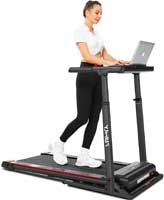
If you are thinking about a treadmill desk, space is the first concern. I get this question all the time. The good news is that treadmill desks are more compact than most people expect. With a few measurements, you can know for sure if one will fit. Let’s break it down step by step.
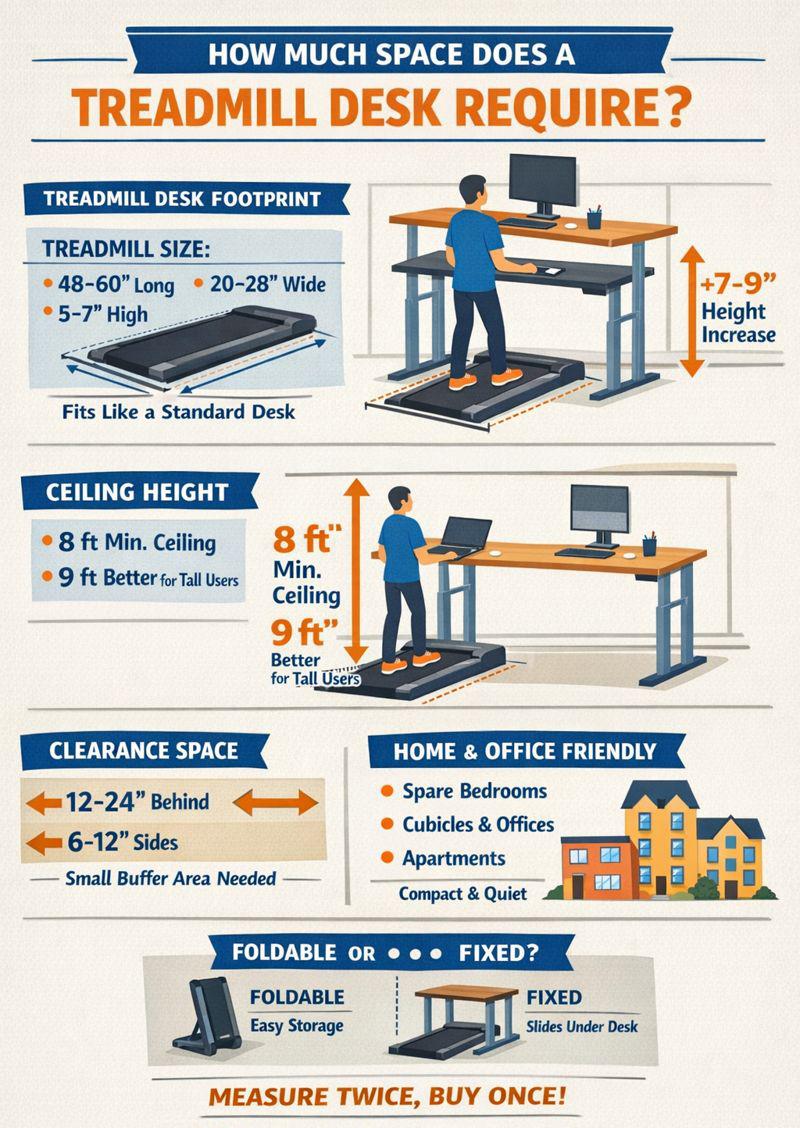
Typical Treadmill Desk Footprint
Most treadmill desks use less space than expected. The treadmill itself is the largest factor.
Average under-desk treadmill size:
- Length: 48–60 inches
- Width: 20–28 inches
- Height: 5–7 inches
These dimensions surprise many buyers. Most under-desk treadmills are slimmer than a yoga mat is long. They are designed to slide under standing desks without drama.
Desk plus treadmill footprint:
- Width: 48–72 inches
- Depth: 30–36 inches
This is roughly the same space as a standard desk. If your current desk fits, a treadmill desk usually will too.
Ceiling Height Requirements
Ceiling height matters more than floor space. This is especially true for taller users. Typical height math:
- Treadmill deck: 5–7 inches
- Shoe sole: 1–1.5 inches
- User height increase: about 7–9 inches
That added height sneaks up on people. Walking posture is upright, not crouched, so you need headroom to stay comfortable.
Recommended ceiling clearance:
- Minimum: 8 feet (96 inches)
- Safer for taller users: 9 feet
Most modern homes meet this easily. However, basements and attics deserve a quick tape measure check.
Space Needed Behind and Around the Desk
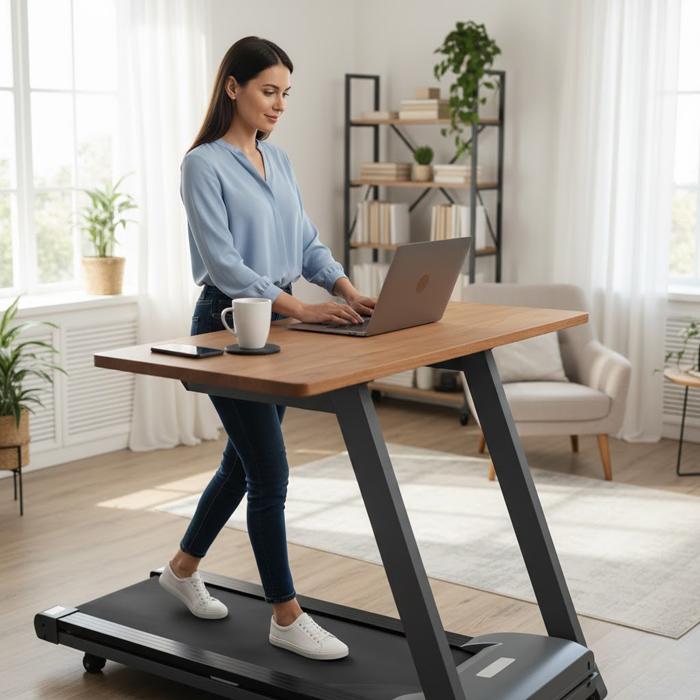
You do not need much extra clearance, because walking treadmills move slowly and predictably.
Recommended buffer space:
- Rear clearance: 12–24 inches
- Side clearance: 6–12 inches
This space helps with mounting and stepping off. It also keeps cords and walls safe from scuffs. Small rooms work fine with treadmill desks. Layout matters more than square footage.
Works well in:
- Spare bedrooms
- Corner offices
- Loft spaces
- Finished basements
Flat flooring makes a big difference. In addition, hard floors or thin mats feel more stable. On the other hand, thick carpet can cause belt drag.
Office and Apartment Use
Under-desk treadmills are compact and quiet – in fact, most run under 50 decibels.
They fit in:
- Cubicles
- Private offices
- Shared workspaces
In apartments, vibration matters more than noise. A thin treadmill mat helps protect floors and neighbors. Always check workplace rules before bringing one in.
Foldable vs Fixed Treadmill Desks
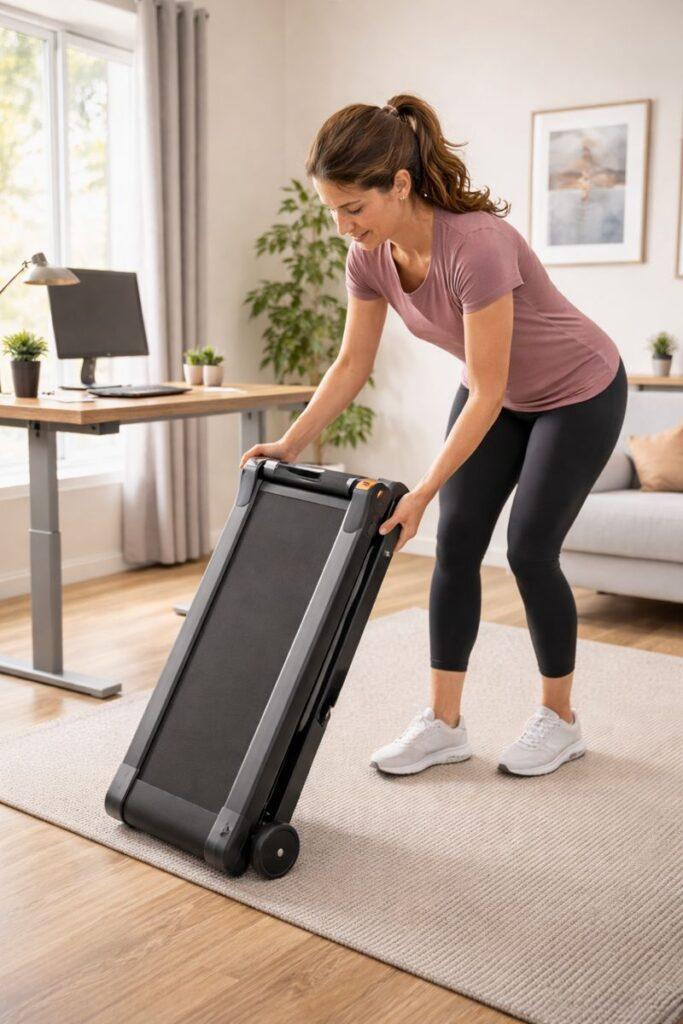
- Foldable models save storage space, however, they do not reduce active footprint.
- Fixed models slide under desks easily, but both require similar walking space.
- Foldable units shine in tight apartments. That said, fixed units feel faster to use daily.
Will a treadmill desk fit in a 10×10 room?
Yes, in most cases. A standard treadmill desk setup usually takes up about 30–36 inches of depth and 48–72 inches of width. That means you are using roughly half the room, not the whole thing.
In a 10×10 room, you still have flexibility. You can place a chair behind you, add a bookshelf on one wall, or keep a filing cabinet nearby. The key is keeping walk paths clear so the room doesn’t feel cramped.
If the room already fits a desk comfortably, a treadmill desk usually fits too.
Can I use one in a low-ceiling basement?
Possibly, but this is the one place you must measure carefully. Walking treadmills raise you more than people expect.
Here’s the simple rule that works every time:
- Take your height and add about 9 inches.
- That accounts for the treadmill deck and your shoes.
If that total fits under the ceiling with an inch or two to spare, you are fine. If you feel close to brushing the ceiling, it will feel uncomfortable long-term. Basements can work great, but only if headroom checks out.
Do I need extra space for handrails?
No. Most under-desk treadmills are designed without handrails on purpose. They are built for slow, controlled walking.
Your desk acts as a natural stabilizer. Your hands hover near the keyboard, mouse, or desktop edge. That provides more balance than a narrow rail would. This design also keeps the footprint smaller and cleaner.
Can I store it when not in use?
Yes, and this is one of the biggest advantages of under-desk treadmills. Many models include front wheels.
You can tip the treadmill slightly and roll it under a bed, sofa, or wall. Some people slide it behind a couch or into a closet. Foldable models make this even easier, but fixed models still store well. If space is tight, storage flexibility matters more than you think.
Does walking require more depth than standing?
No. Walking on a treadmill desk happens in place. You are not moving forward through the room.
Your stride stays centered on the belt at slow speeds. The depth needed for walking is the same as standing still. This surprises many first-time buyers.
As long as the treadmill fits under your desk, walking does not add extra space requirements.
Conclusion
Treadmill desks are surprisingly space-friendly. They usually fit where a normal desk fits. Ceiling height and desk depth matter most. Measure once and buy with confidence.
Reputable Resources For More Information
American Council on Exercise (ACE): Walking workstation research
Mayo Clinic: Sitting vs walking health guidance
OSHA: Office ergonomics recommendations
Harvard Health Publishing: Movement and productivity studies