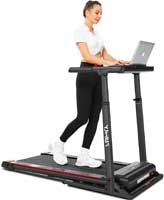
Buying a treadmill desk is exciting—but it’s also easy to buy the wrong one. Specs look great on paper, yet real-world use is what matters. This checklist walks through the 10 decision points that actually affect daily comfort, productivity, and long-term satisfaction.
Use this as a pre-purchase gut check before spending your money.
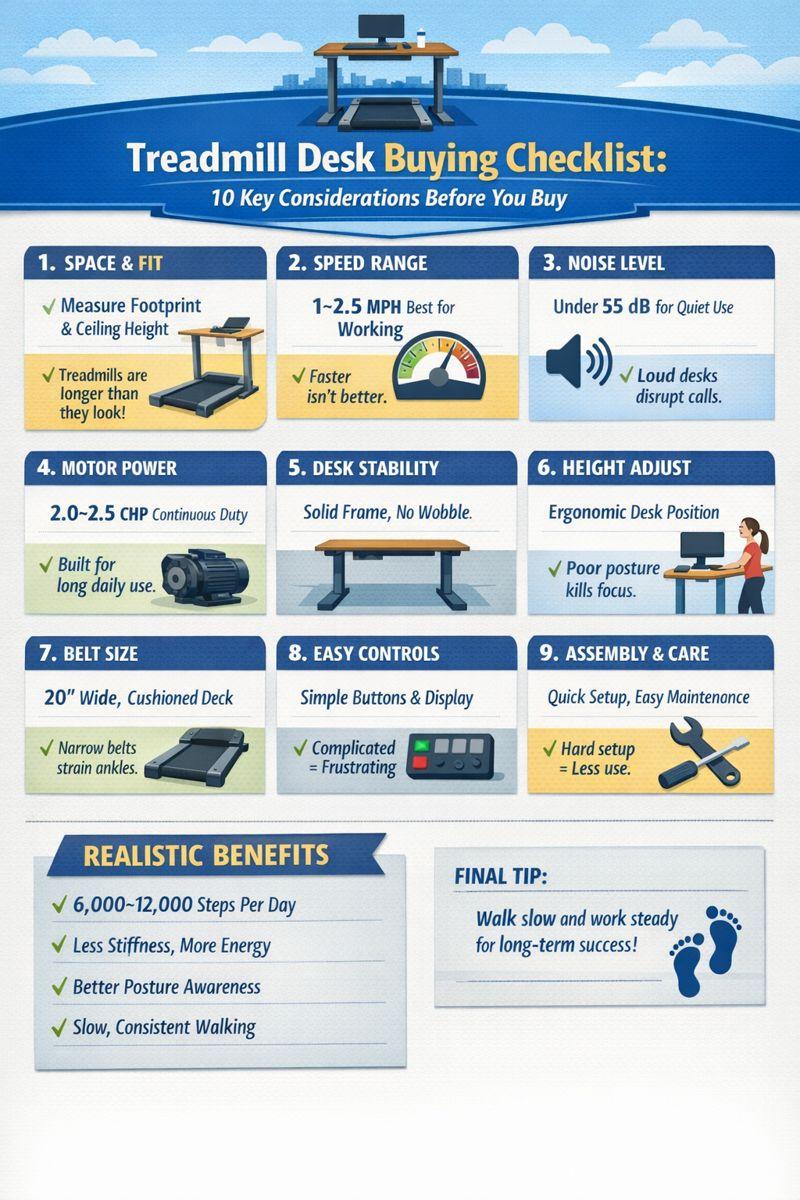
1. Space & Fit (Don’t Skip This)
☐ Measure the treadmill footprint (length × width)
☐ Confirm desk depth works with your monitor setup
☐ Check ceiling height if you’re tall or plan to use incline
☐ Ensure clearance to slide the treadmill out when not in use
Reality tip: Many returns happen because buyers underestimate length. Walking belts are longer than they look online. Also see: How Much Space Does a Treadmill Desk Require?
2. Speed Range That Matches Work Tasks
☐ Minimum speed of 0.4–0.6 mph for typing
☐ Comfortable work zone around 1.2–2.5 mph
☐ Top speed matters less unless you plan to jog
Reality tip: Faster isn’t better. Most people spend 90% of desk time under 3 mph.
3. Noise Level (Critical for Calls)
☐ Brushless or quiet DC motor
☐ Rated under 50–55 dB at walking speeds
☐ Vibration dampening under the belt
Reality tip: A “quiet” treadmill should sound like a low fan, not a washing machine.
4. Motor Power & Duty Rating
☐ At least 2.0–2.5 CHP for daily walking
☐ Designed for continuous use, not short workouts
☐ Heat management vents or cooling
Reality tip: Desk walking stresses motors differently than running—duration matters more than speed.
5. Desk Stability (Where Cheap Models Fail)
☐ Solid steel frame, not thin tubing
☐ No wobble at 2–3 mph
☐ Stable enough for dual monitors
Reality tip: Even small desk vibrations increase typing errors and fatigue.
6. Height Adjustability & Ergonomics
☐ Desk height range fits your standing posture
☐ Keyboard surface stays level while walking
☐ Monitor height allows neutral neck position
Reality tip: If your shoulders rise or wrists bend, you won’t use it consistently.
7. Belt Size & Comfort
☐ Belt width of 18–20 inches minimum
☐ Enough length for natural stride
☐ Cushioned deck to reduce foot fatigue
Reality tip: Narrow belts force micro-adjustments that increase ankle and hip strain.
8. Controls & Display
☐ Simple speed controls within reach
☐ Large, readable display
☐ Optional remote or app control
Reality tip: Complicated controls discourage quick speed changes during work.
9. Assembly, Maintenance & Storage
☐ Minimal assembly time
☐ Easy belt alignment and tensioning
☐ Wheels or slim profile for storage
Reality tip: If setup feels overwhelming, usage drops fast.
10. Warranty, Support & True Cost
☐ At least 1–3 year motor warranty
☐ Clear return policy
☐ Shipping weight and return shipping costs
Reality tip: Heavy treadmills are expensive to return—buy right the first time.
What Most Buyers Can Realistically Expect
- 6,000–12,000 extra steps per day
- Better afternoon energy and fewer stiffness breaks
- Improved posture awareness
- Slight learning curve (1–2 weeks)
- Best results when walking slowly, consistently
A treadmill desk works best as a long-term habit, not a fitness sprint.
Quick Decision Shortcut
If you:
- Work at a computer most of the day
- Want movement without sweating
- Value consistency over intensity
…then a treadmill desk can be one of the most practical upgrades you’ll ever make.