When people shop for a treadmill desk, speed questions come first. Incline usually comes second. Most buyers assume faster or steeper is better. In practice, usable ranges are much narrower.
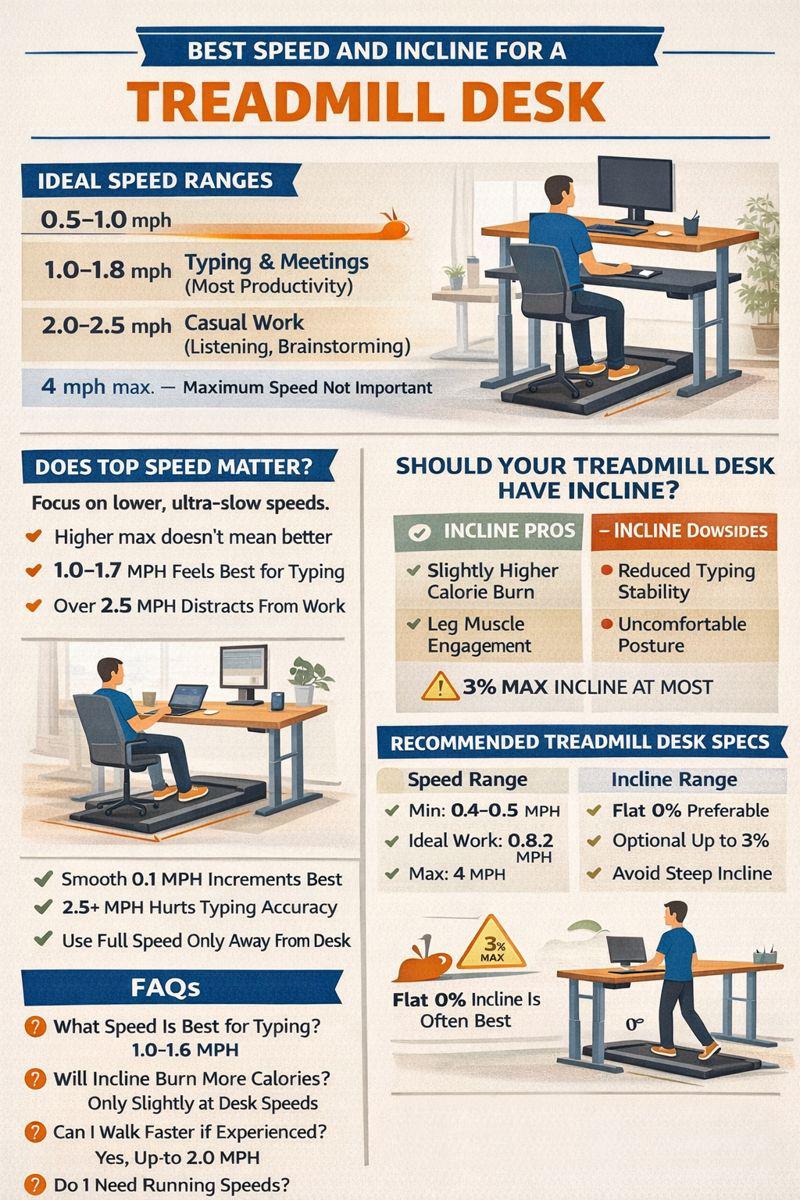
After years of using and testing treadmill desks, I can tell you this: The best treadmill desk is built for slow, steady movement. Anything beyond that often goes unused.
Let’s break down what really matters.
What Speeds Are Actually Usable While Working?
Most treadmill desks advertise top speeds between 4 and 8 mph. Those numbers look impressive on product pages. They are mostly irrelevant for desk use.
Realistic working speeds fall here:
- 0.5–1.0 mph: light movement, reading, emails
- 1.0–1.8 mph: typing, meetings, focused work
- 2.0–2.5 mph: casual tasks, brainstorming, listening
Once you cross 2.5 mph, productivity drops fast, ans typing accuracy suffers. In addition, mouse control becomes sloppy, and video calls feel unstable.
Walking at a desk is not exercise walking. In other words, it is movement layered onto work.
Why Ultra-Slow Speed Control Matters
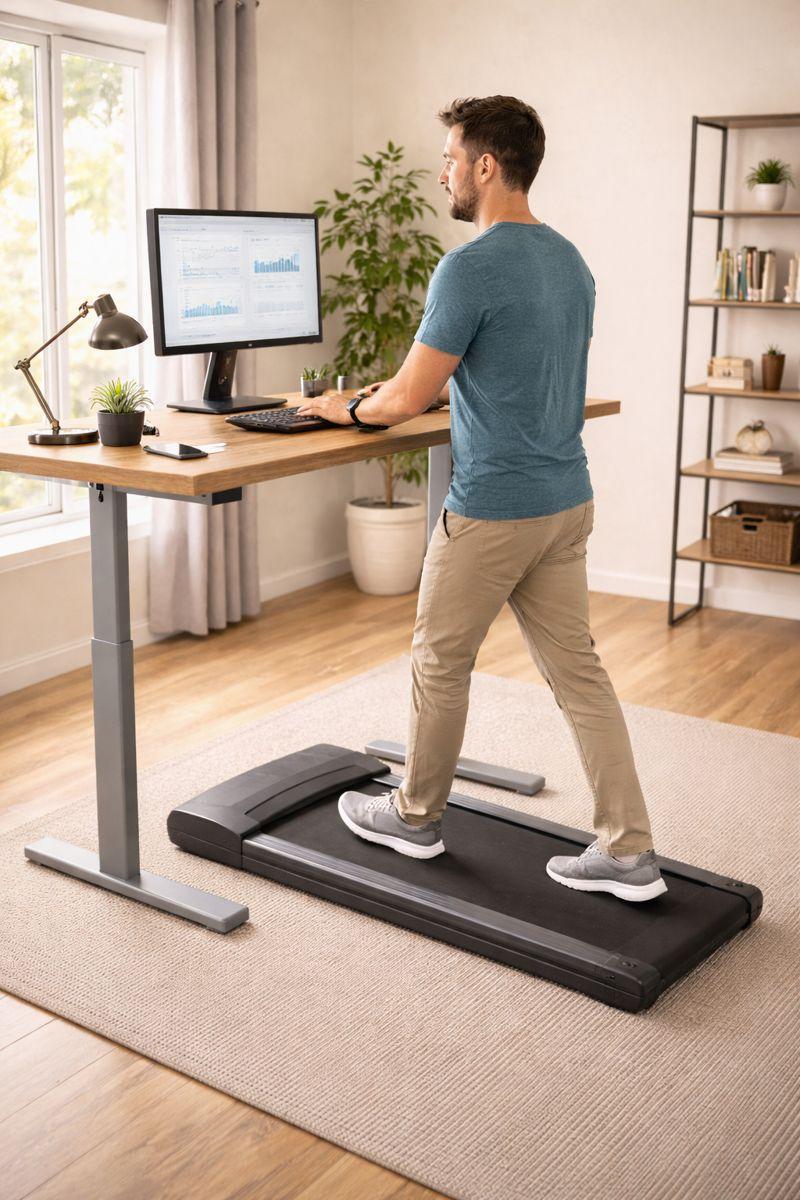
The most overlooked feature is low-speed precision. Some treadmills jump too fast between settings.
Good treadmill desks allow:
- 0.1 mph increments
- Smooth acceleration
- Stable belt tracking
That fine control lets you dial in a sustainable pace. Many people settle around 1.3–1.7 mph long-term. That speed feels natural and repeatable.
Does Maximum Speed Matter At All?
Only slightly – a higher max speed can signal a stronger motor. It does not mean you will use it.
Most desk walkers never exceed 2.0 mph during work hours. If you want to jog, you will not do it while typing – that is a separate use case. Therefore, prioritize smooth low speeds over flashy top numbers.
Should A Treadmill Desk Have Incline?
Incline sounds appealing. However, it rarely delivers value at a desk.
Incline pros:
- Slightly higher calorie burn
- Leg muscle engagement
Incline downsides:
- Increased joint strain
- Reduced typing stability
- Awkward posture at a desk
At slow walking speeds, incline feels unnatural. Your body leans forward while your desk stays flat. That mismatch causes discomfort.
When Incline Might Make Sense
Incline can help if you:
- Use the treadmill away from the desk
- Walk during breaks, not work
- Keep incline very low
Anything over 3 percent becomes distracting quickly. Most users turn incline off permanently. Many under-desk treadmills skip incline entirely. That is often a smart design choice.
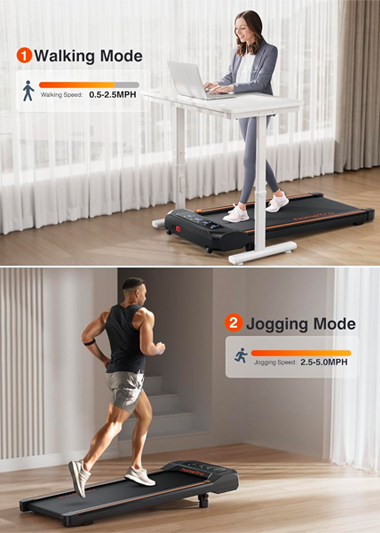
Ideal Speed & Incline Specs To Look For
Here is what actually works for desk walking.
Recommended speed range:
- Minimum: 0.4–0.5 mph
- Ideal working range: 0.8–2.0 mph
- Maximum: 4.0 mph is plenty
Recommended incline range:
- Fixed flat deck is ideal
- Optional incline up to 3 percent
- Avoid steep incline systems
These specs support real-world productivity. They also reduce noise and vibration.
How Speed Affects Focus And Fatigue
Slow walking increases circulation without mental drain. So, that is the sweet spot.
Faster speeds increase:
- Shoulder tension
- Grip fatigue
- Cognitive load
You end up thinking about walking instead of working, and that defeats the purpose. Iin fact, most people alternate speeds during the day. Slower for focus, or slightly faster for calls or listening tasks.
Frequently Asked Questions
What Is The Best Speed For Typing While Walking?
Most people type best between 1.0 and 1.6 mph. That range balances stability and movement.
Can I Walk Faster If I Am Experienced?
Yes, slightly. Even experienced users rarely exceed 2.0 mph while working.
Is Incline Necessary For Health Benefits?
No. Flat walking still improves circulation and reduces sitting time.
Will Incline Burn Significantly More Calories?
Not at desk speeds. The difference is small and often not worth the discomfort.
Should I Buy A Desk Treadmill With Running Speeds?
Only if you plan to use it separately from work. For desk use alone, it is unnecessary.
Conclusion
Treadmill desks work best at slow speeds. Usable ranges are narrower than marketing suggests. Low-speed control matters more than top speed. Incline is optional and often unnecessary.
Choose a treadmill designed for walking, not running. Your productivity and comfort will thank you.
Reputable Resources For More Information
- American Council on Exercise (ACE):
https://www.acefitness.org - Mayo Clinic – Movement And Sitting Health:
https://www.mayoclinic.org - Harvard Health Publishing – Walking Benefits:
https://www.health.harvard.edu - OSHA – Office Ergonomics Guidance:
https://www.osha.gov/ergonomics